
Coronation Fjord
A Jen Higgins Memorial Fund Trip Report
Completed by grant recipients: Amanda Bischke, James Klemmensen, Shira Biner, & Noah Besen
After a series of flight delays and cancellations, the team arrived in Qikiqtarjuaq, Nunavut, on July 7th 2023. Our plan had been to begin kayaking from this village, however a frozen Arctic ocean had other plans for us. Initially, we thought we would wait in Qikiqtarjuaq while the ice melted, but that timeline was unknown.
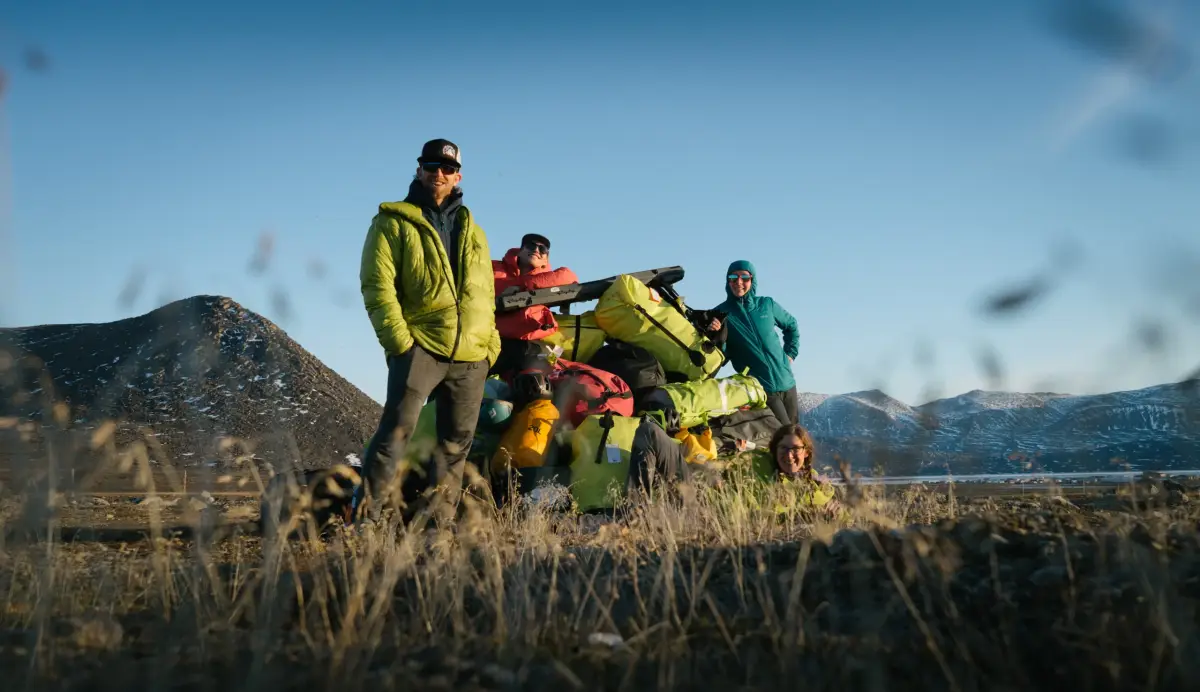
With over 1000 lbs of supplies in tow, figuring out how to start moving on foot felt daunting. Billy – the town’s only outfitter – offered to take us as far as he could on the ice by snowmobile. Accepting his offer felt like it would mean sacrificing our human powered ethic. So, we determined that a practical solution allowing us to begin moving would be to have Billy shuttle our heaviest supplies, including the inflatable sea kayaks, climbing gear, and most of our food, to a small island 17 km across the ice. We would then walk with simple overnight packs to meet the rest of the gear.
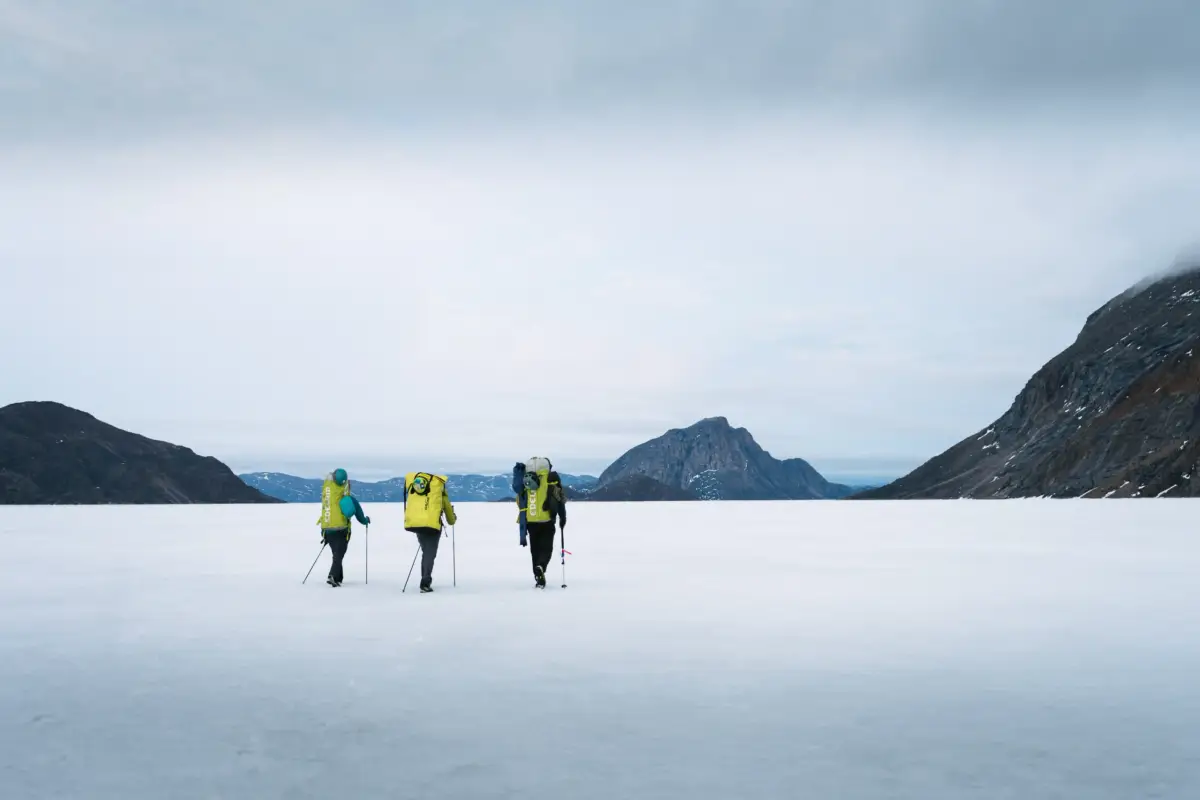
Since daylight was never an issue, that evening after helping shuttle the gear, the four of us set off on foot. We waved goodbye to town locals watching from shore and were in awe at the landscape we stepped into. Before we knew it, we were happily reunited with our gear on a small island, 200m wide by 800m long, which soon became referred to as ‘Faffin’ Island. Faffin, because that’s exactly what we did for the next 5 days, looking out across the last few kilometers of frozen ocean, after which open water promised passage for the rest of our journey.
We climbed a couple easy single pitch routes on some bluffs along the edge of the
island, played cards, danced, told stories and got increasingly antsy to keep moving forward. Day after day we looked out across the ocean where changes were perceptible yet slow.
Scoping missions began as we investigated potential strategies to make it to open water. For the first attempt Shira and Noah inflated a boat and tried to paddle through the most open channels amidst the ice. James and Amanda remained on shore to offer guidance from a higher vantage point, as well as to serve as a rescue team. After a couple hours of paddling, Shira and Noah had made it a mere 50m. Rather than paddling, they’d primarily been chopping ice with paddles, stepping in and out of the kayak trying to find progress. Defeated, we returned to camp and discussed options over dinner.
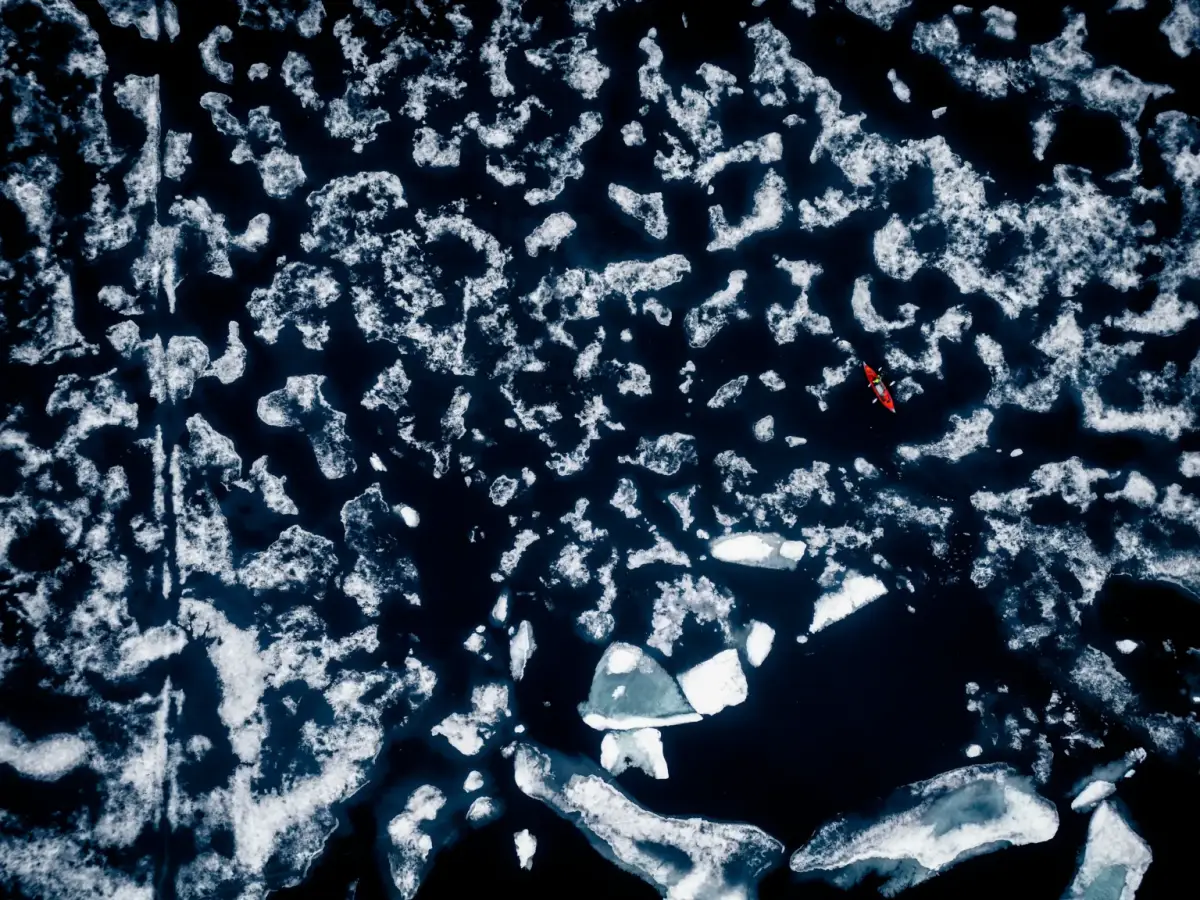
The next day, Shira and James departed on another scoping mission. This time, they would walk on the most frozen parts of the ocean, dressed in dry suits and life jackets with a kayak in their backpacks. In a short time Shira’s playful giggles break the silence over the radio.
They had reached open water!
Packing chaos ensued after breakfast the next morning until our island camp was compressed into a mountain of dry bags. Back and forth, back and forth, over and over, we shuttle our loads in sections of 200 m hauls. It’s only 3 km of hiking, but it took all day to reach the point where the ice was so thin it could no longer be trusted to support our weight.
We inflated our boats and crammed the gear into every inch of free space. We moved cautiously, knowing that we were quite literally on thin ice. Suddenly, James broke through the ice, submerged up to his waist. He had a kayak within reach and quickly pulled himself out of the water, moving on with the current mission almost unphased. We all straddled our individual boats and continued waddling outwards on the ever thinning ice. Eventually the ice broke away underneath our feet and we all landed sitting on top of our kayaks.
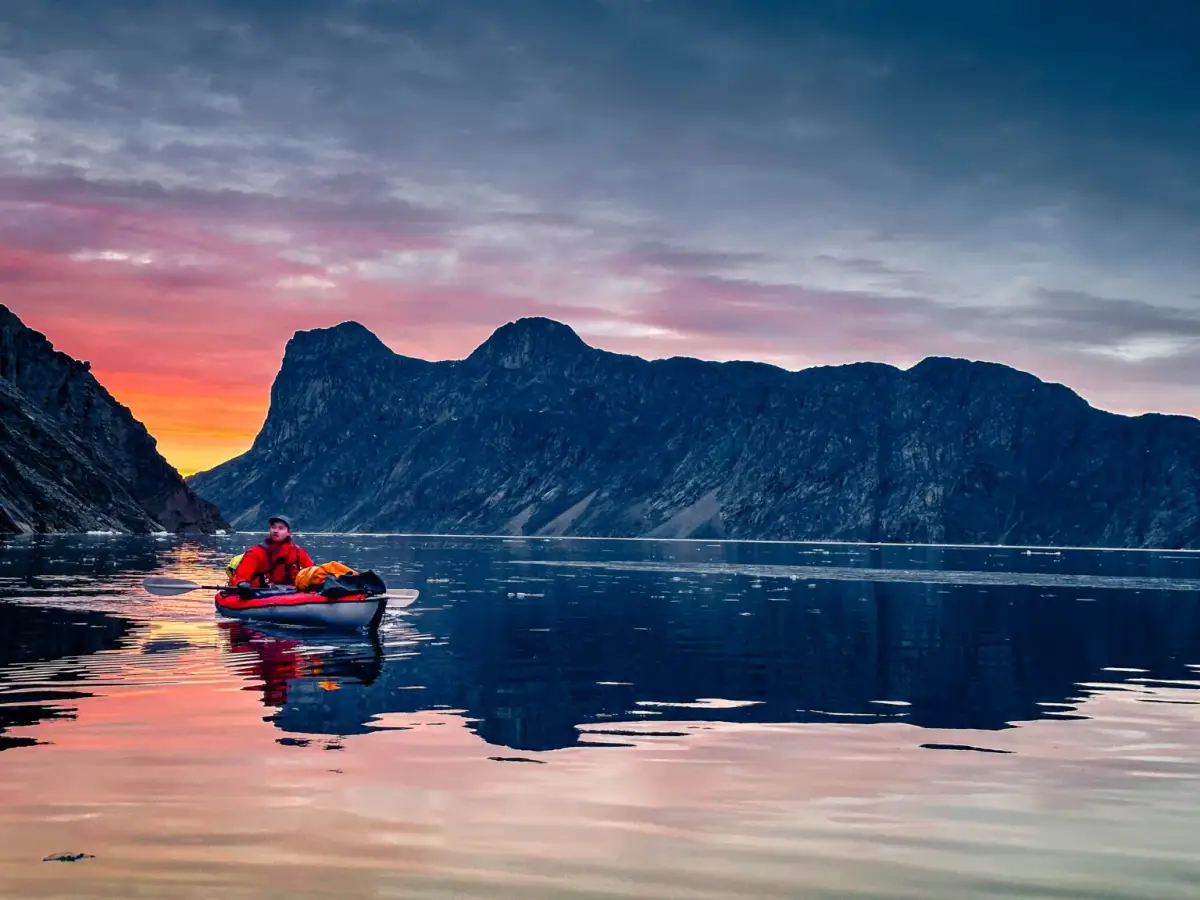
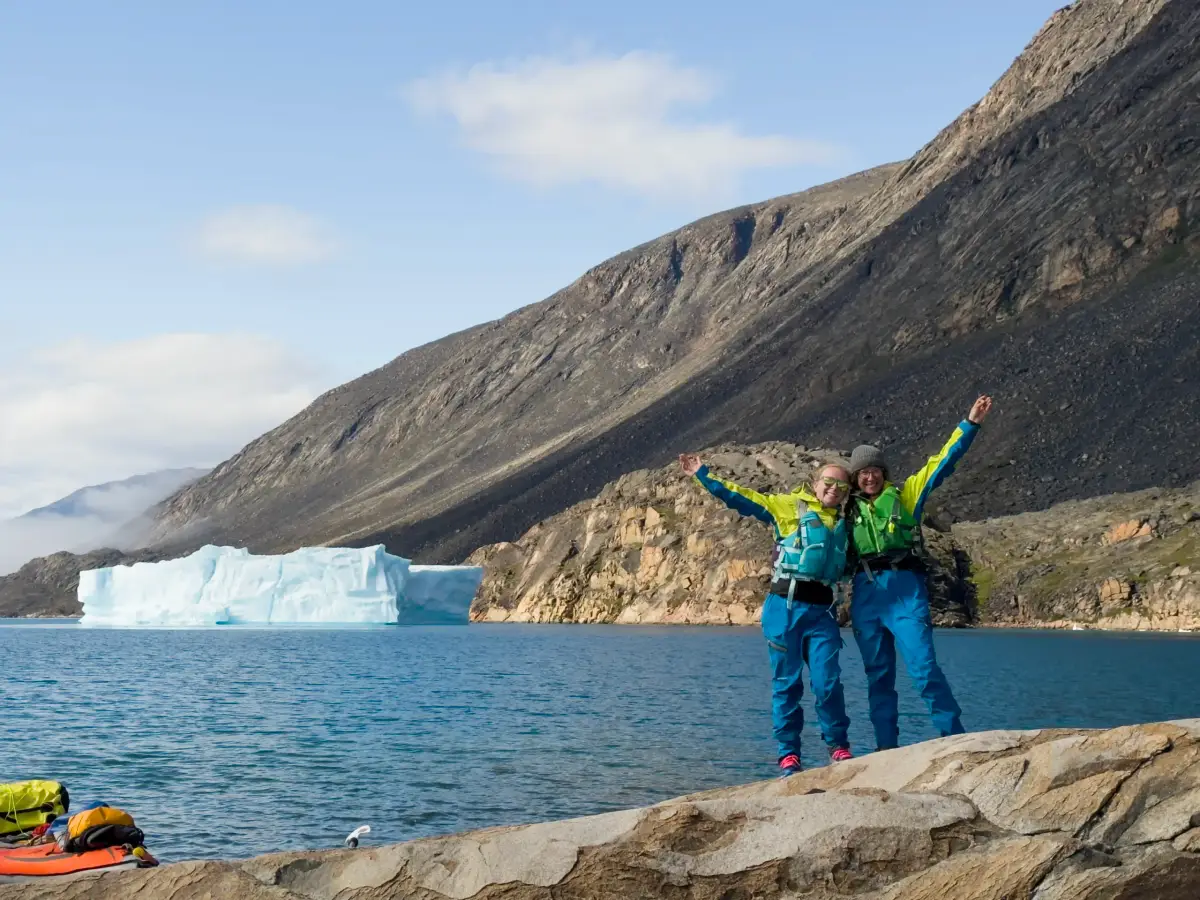
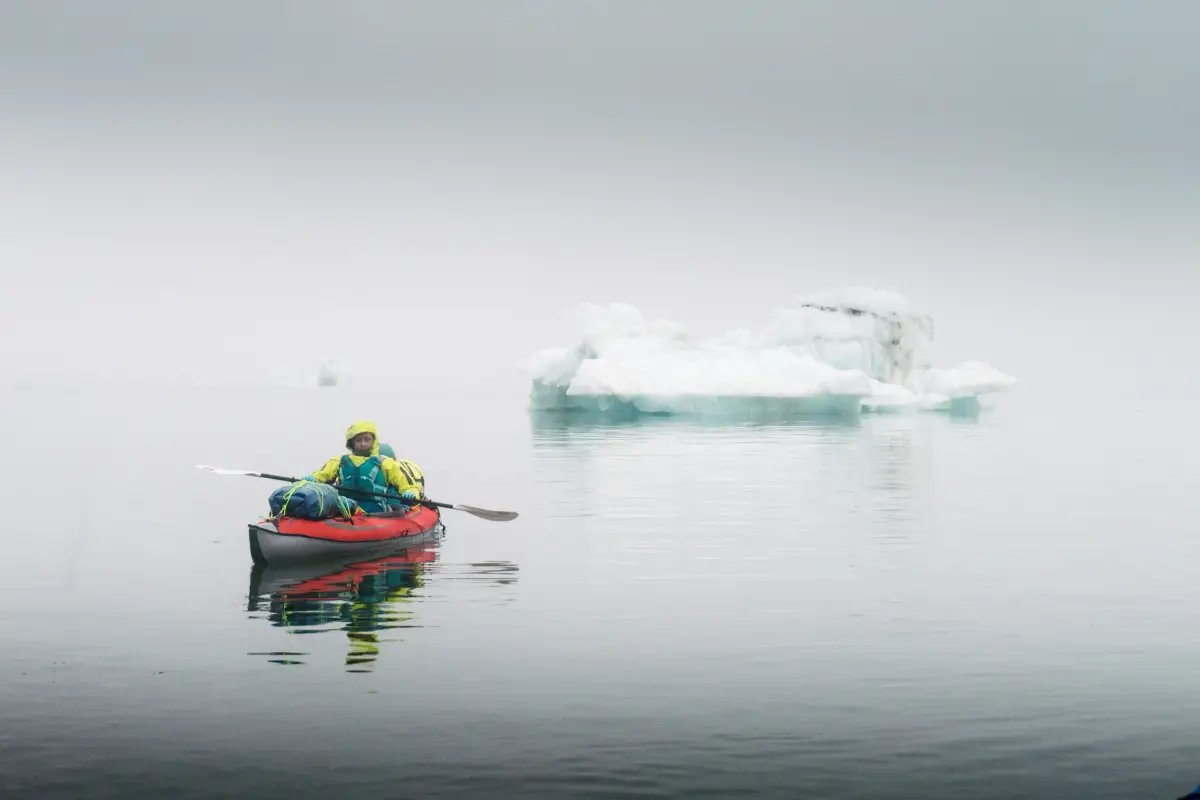
Paddles glided through the water as the midnight sun hovered on the horizon, both rising and setting simultaneously behind us. We arrived at our camp spot and settled into bed. Moral was high as we packed up camp the next morning, we had finally made it to the simpler task of paddling another 50km. However, it couldn’t be that simple. As we were finishing loading our boats the tide brought in a sheet of sea ice, piling up on shore and threatening to flip our boats. Noah and Shira set off in the water, and quickly discovered paddles were nearly useless. They resorted to using their feet on the ice in a similar style to a toddler’s push bike. James and Amanda pulled out a rope and towed their boats along the shore until they’d outrun the incoming ice.
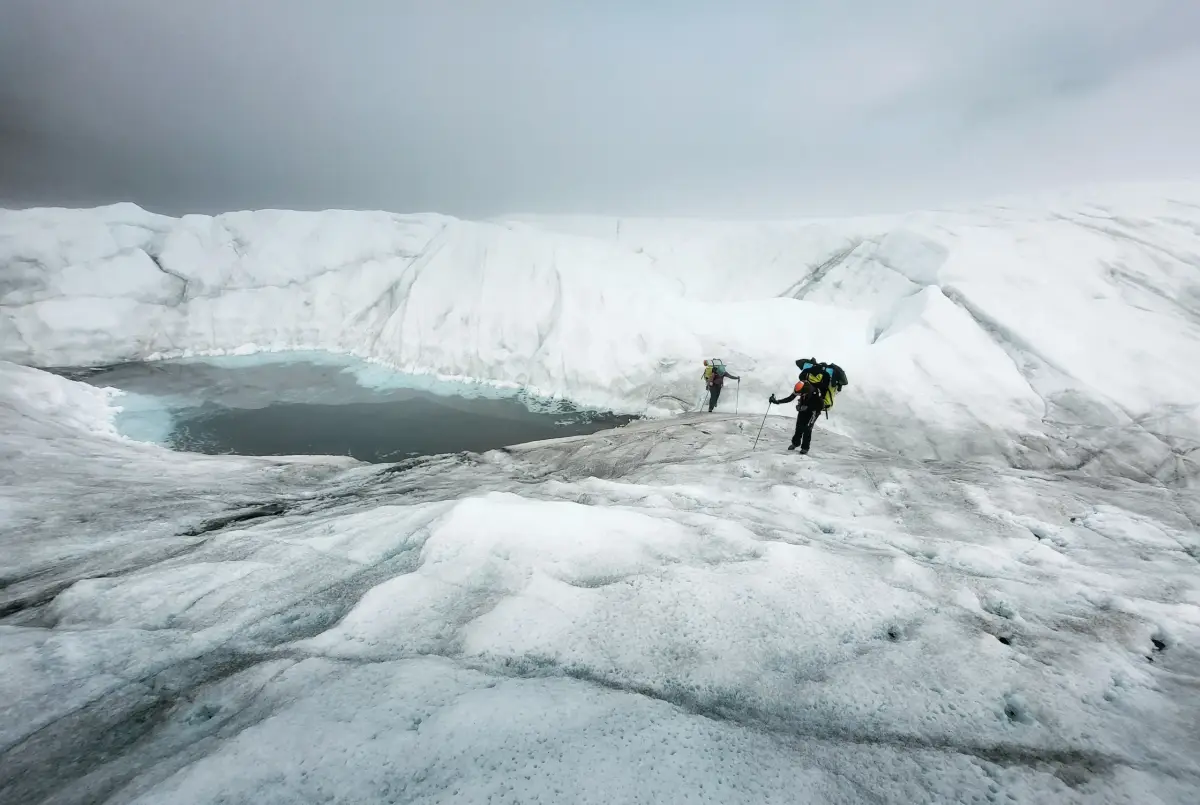
Now, paddle-stroke by paddle-stroke, the days passed quickly, eventually dropping us at the toe of the Coronation Glacier, staring down our next obstacle. The toe of the glacier meets the ocean abruptly, in a vertical wall of deep blue ice. Furthermore, the toe of the glacier is heavily crevassed, and either side is flanked by ice-core moraines (rock covering ice, making it difficult to discern the location of crevasses, and posing rockfall hazard on steep sections of ice). We quickly realized that we weren’t in a safe camping location, and we wanted to wait until we had visibility to navigate the glacier.
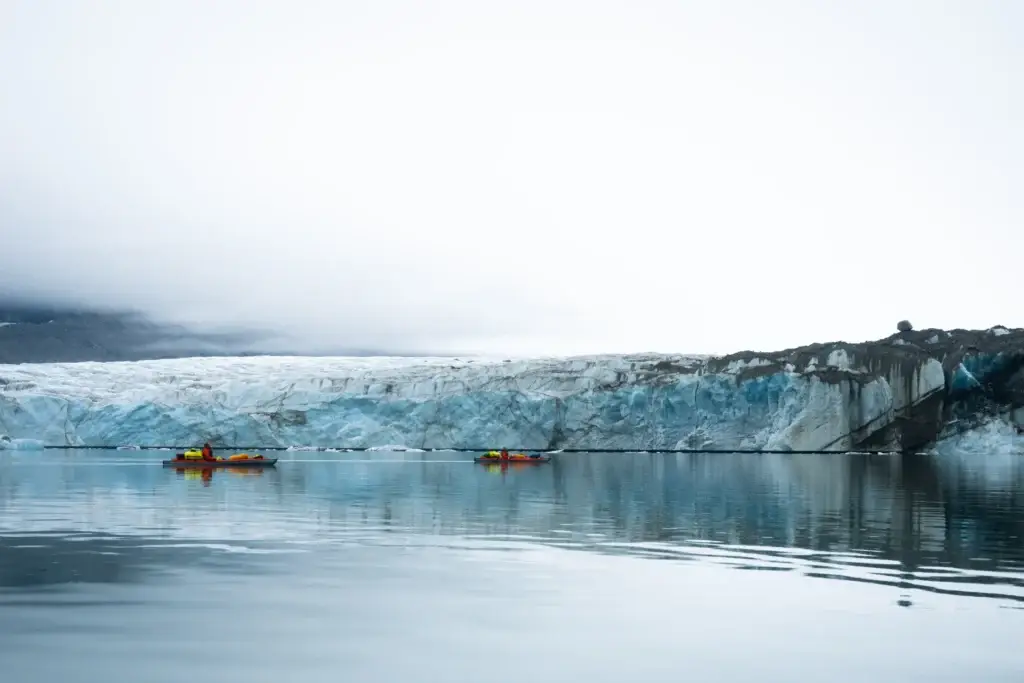
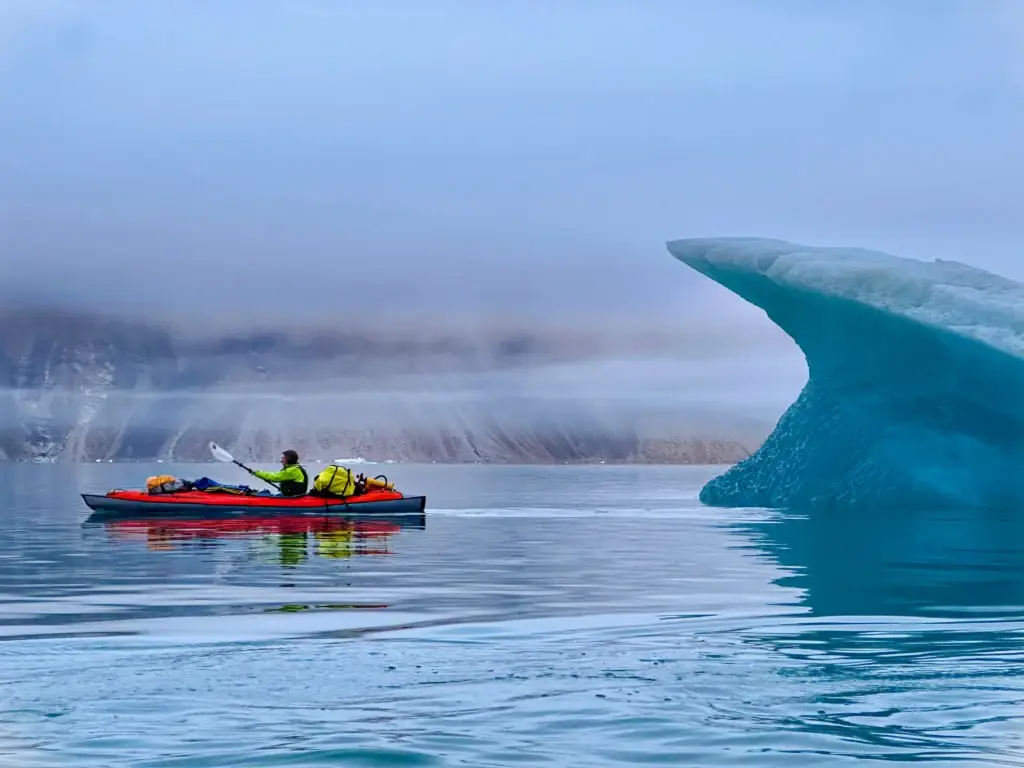
The following day, after several more hours of travel, we at last found a passage onto the glacier we felt comfortable with, and walked along the glacier, setting camp at what would become our base camp location.
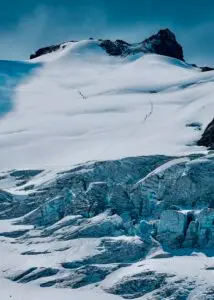
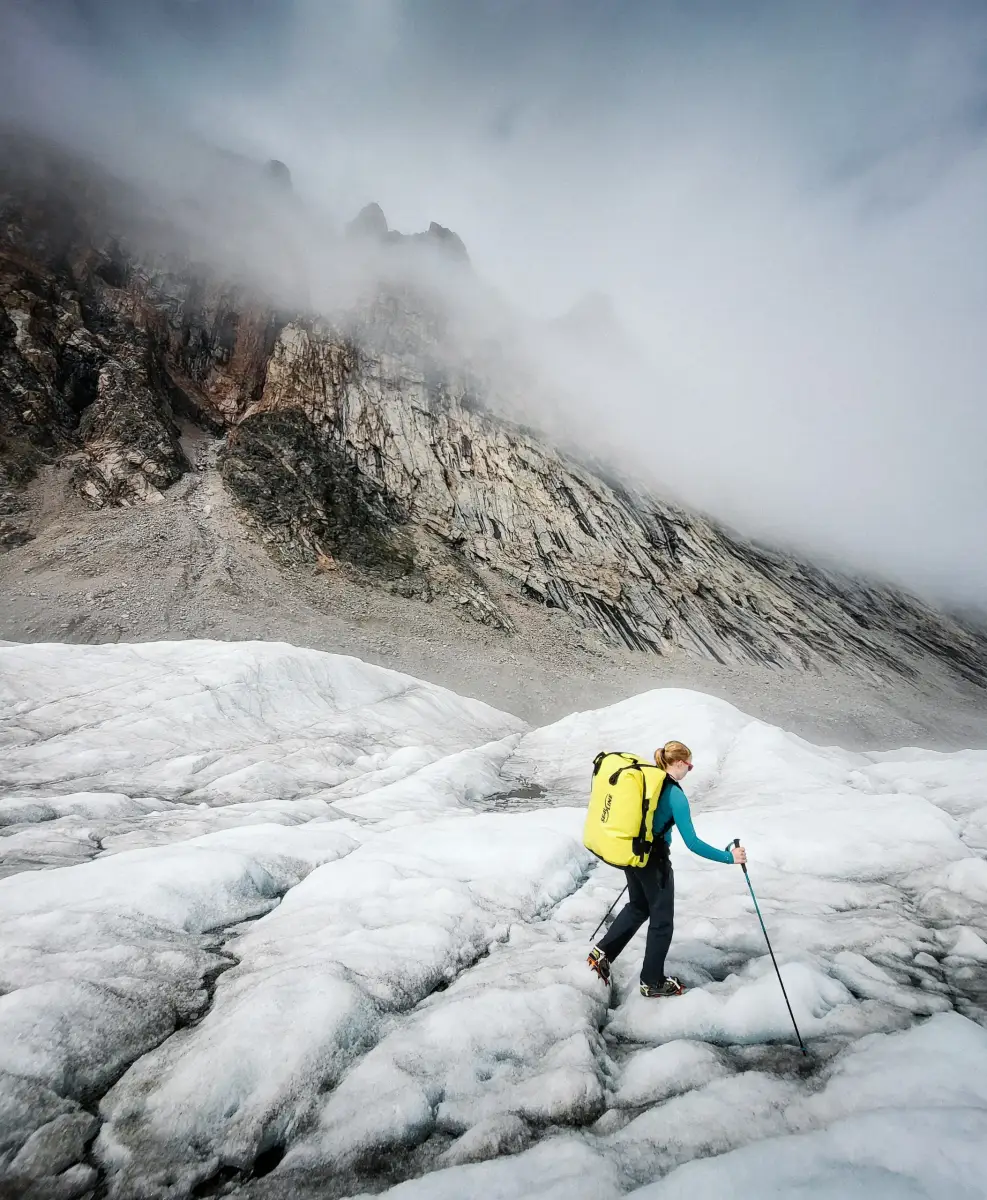
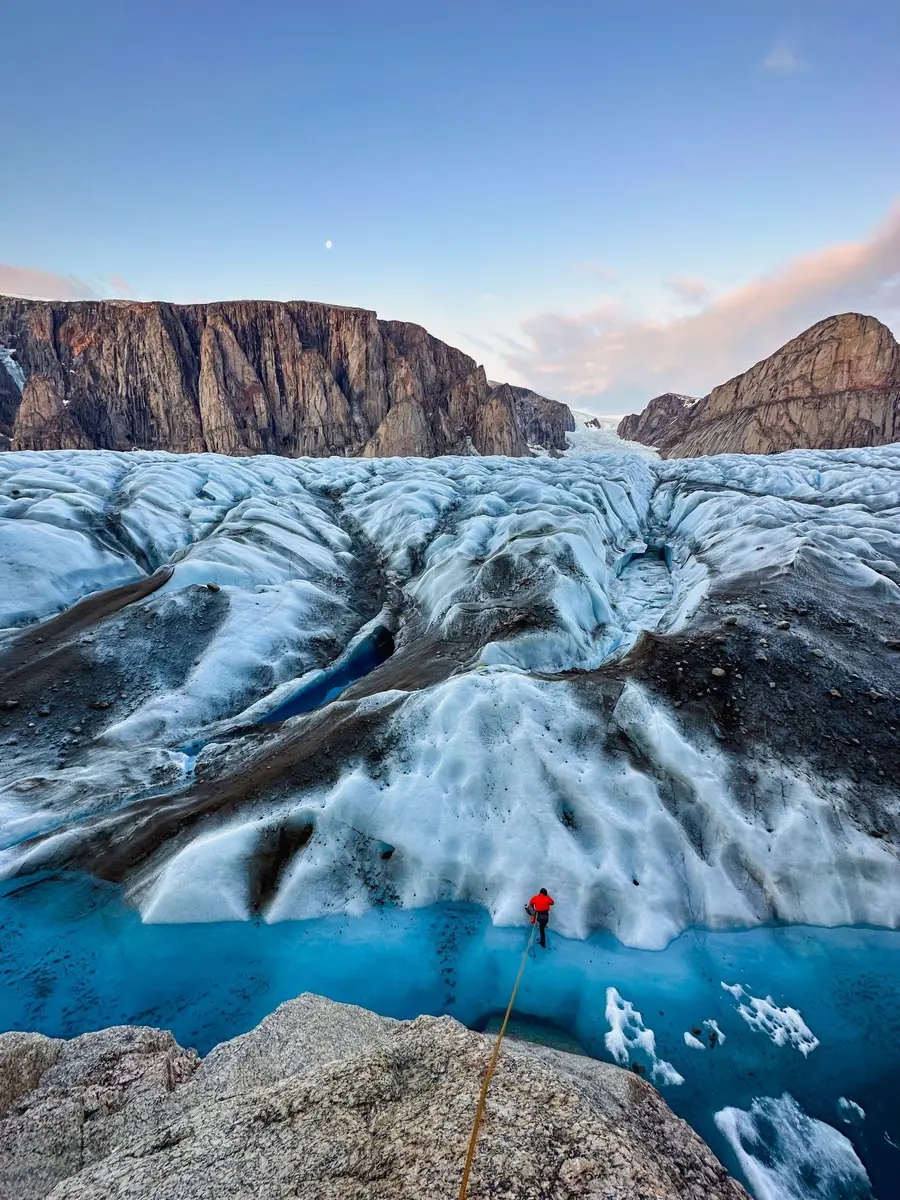
The Coronation Glacier was truly one of the most beautiful glaciers any of us have had the privilege of traveling on.
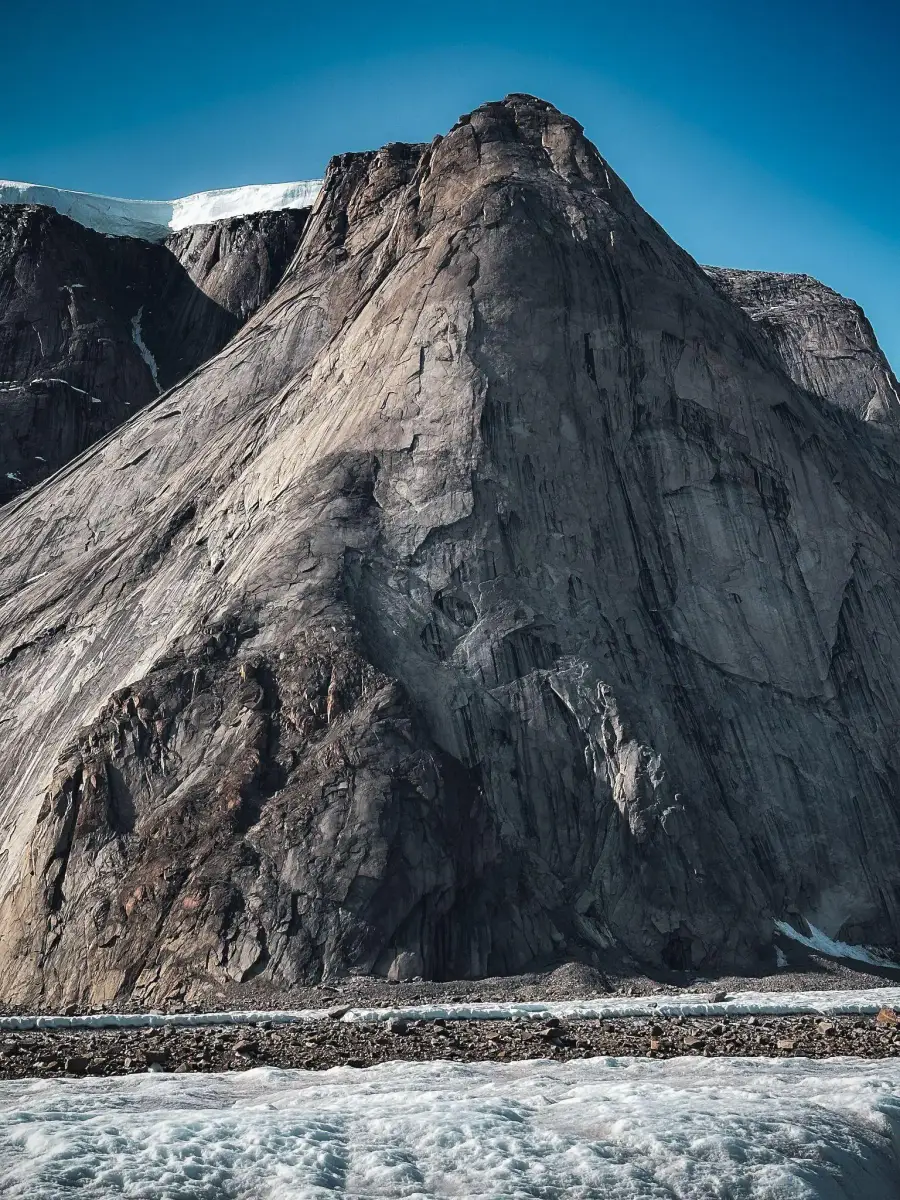
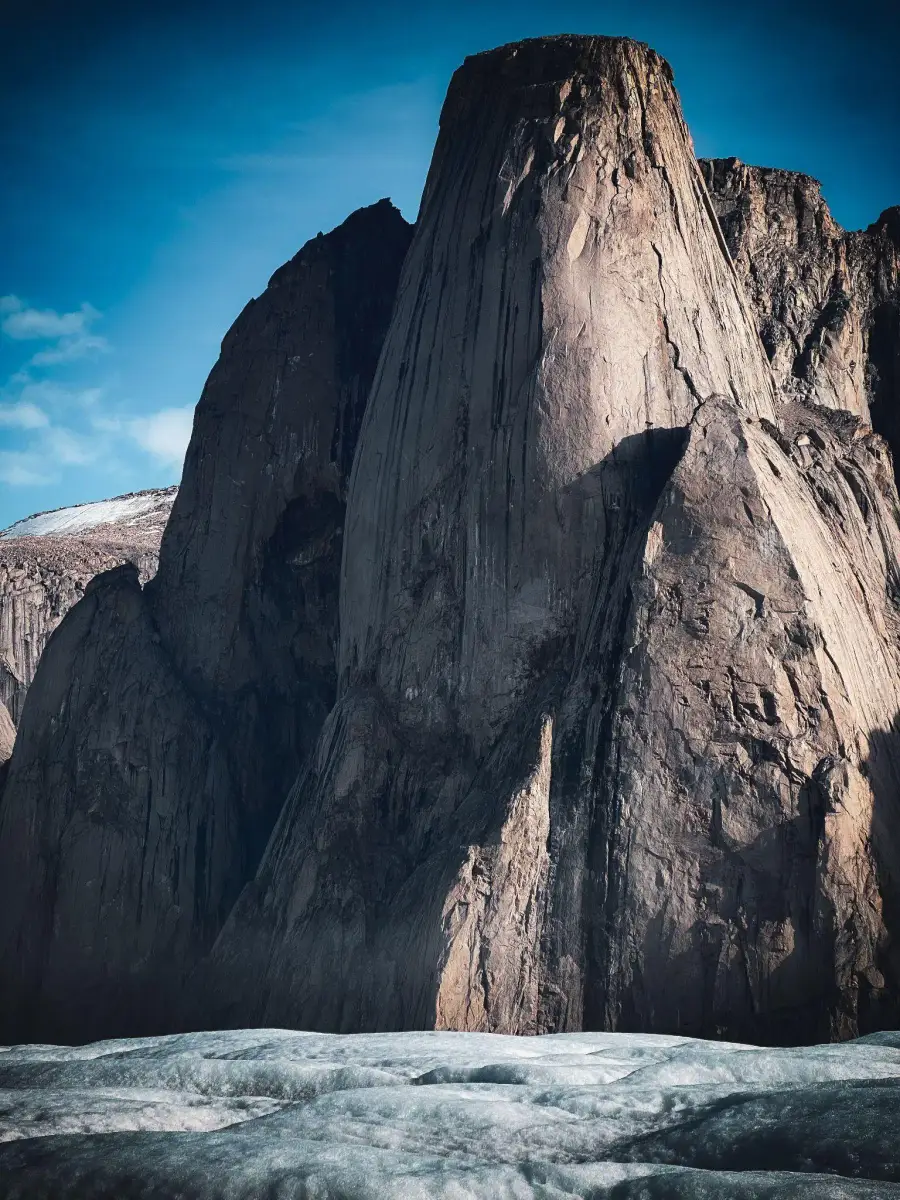
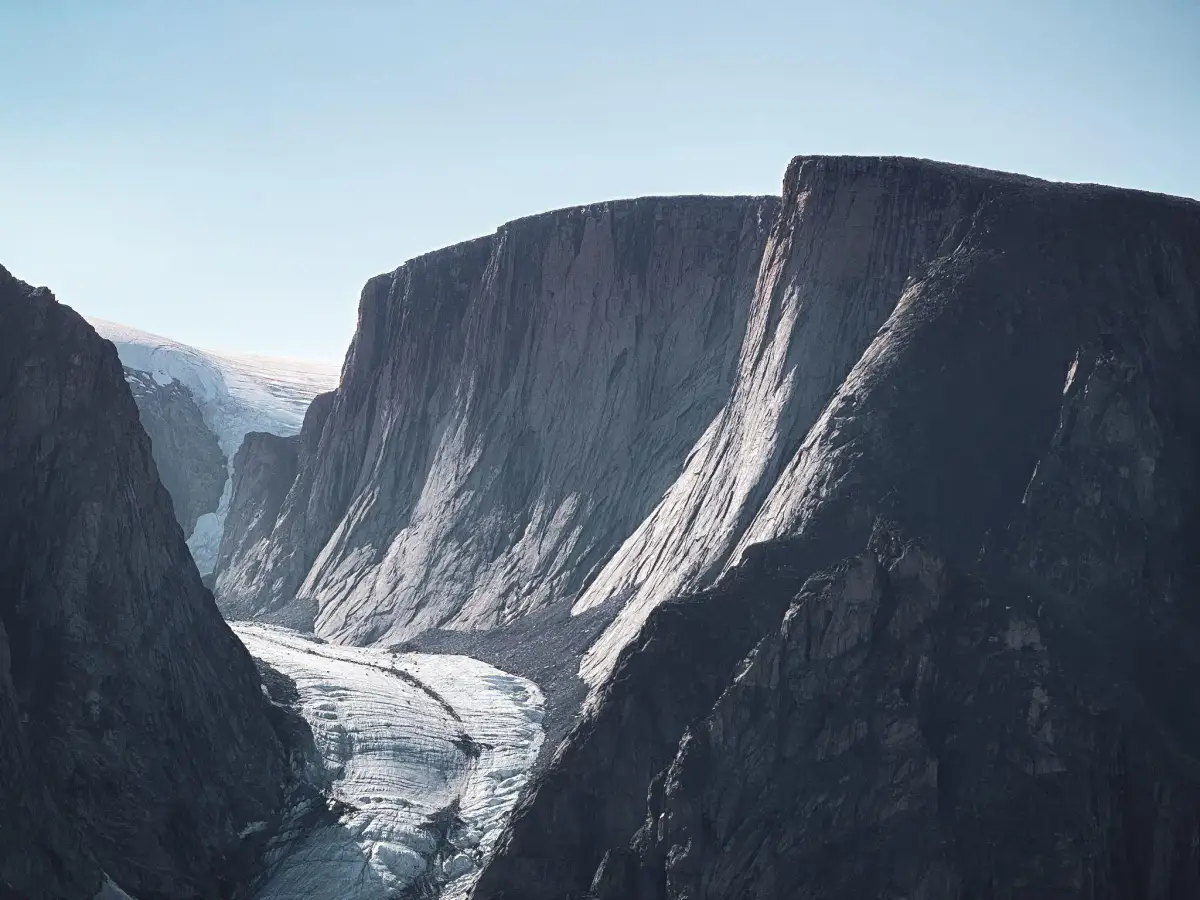
Its topography surprised us with very little crevasse hazard overall, and many strange and beautiful water features snaking their way across the surface. Surrounding the glacier, magnificent granite cliffs rise on all sides. Despite having extensively studied maps of the area, we were awestruck by both its beauty, and climbing potential.
This stunning beauty was almost enough to numb the pain that came the following day. For now, it was time to hike back to the toe of the glacier, and fill our 100L backpacks to the brim with heavy climbing gear, and food. Of course, we’ve all shuttled loads like this before – this was not our first rodeo. But it was, perhaps, our wildest and most aggressive rodeo. The terrain we’d traveled through to make safe passage onto the glacier involved several kms of travel along unstable scree slopes, followed by a long hike along the glacier through meandering rolling terrain. Never have we so thoroughly earned a rest day. However, a promising weather forecast meant the next day was spent scoping climbing options along the glacier.
Amanda and Shira had hiked 5km north of basecamp, scouring the west facing walls for options. The rock quality left much to be desired, however in the distance there was an east facing wall that appeared promising. They packed their bags and navigated the countless streams for nearly 6 hours before reaching it’s base. Unfortunately, once they were up close with the feature they realized the ‘cracks’ they had seen in photos were merely water streaks, and the wall was not featured enough to be conducive to free climbing. They walked back to camp, scoping the walls on this side of the glacier along the way. As they walked they could hear Noah and James over the radio, questing up the feature they’d set their eyes on.
Noah and James first objective ended up being their largest – a prominent southwest buttress right above camp, rising 800m above the glacier. Despite the daunting height of the wall, the pair believed there to be a promising and mostly moderate path to the summit, with continuous crack and corner systems, separated by sections of moderate ridge climbing. In their packs they carried two days worth of food, along with light sleeping gear, and a selection of extra nuts, bolts, and pitons, to facilitate a descent should they decide to bail partway up the wall. Slowly, they made their way upwards. The rock quality was less than perfect, but to their delight, the harder pitches mostly consisted of solid rock, facilitating solid protection and relatively fast climbing. At 2am, the team topped out, after roughly 17 hours of climbing. After a short night of sleep on the summit plateau, they descended via a prominent river valley northeast of the climb, eager to tell the girls all about their experience on the wall.
Without a doubt, this was one of the most meaningful climbing experiences of their lives – neither had done an alpine-style first ascent of this nature before, and this achievement was one they had dreamed of for many years.
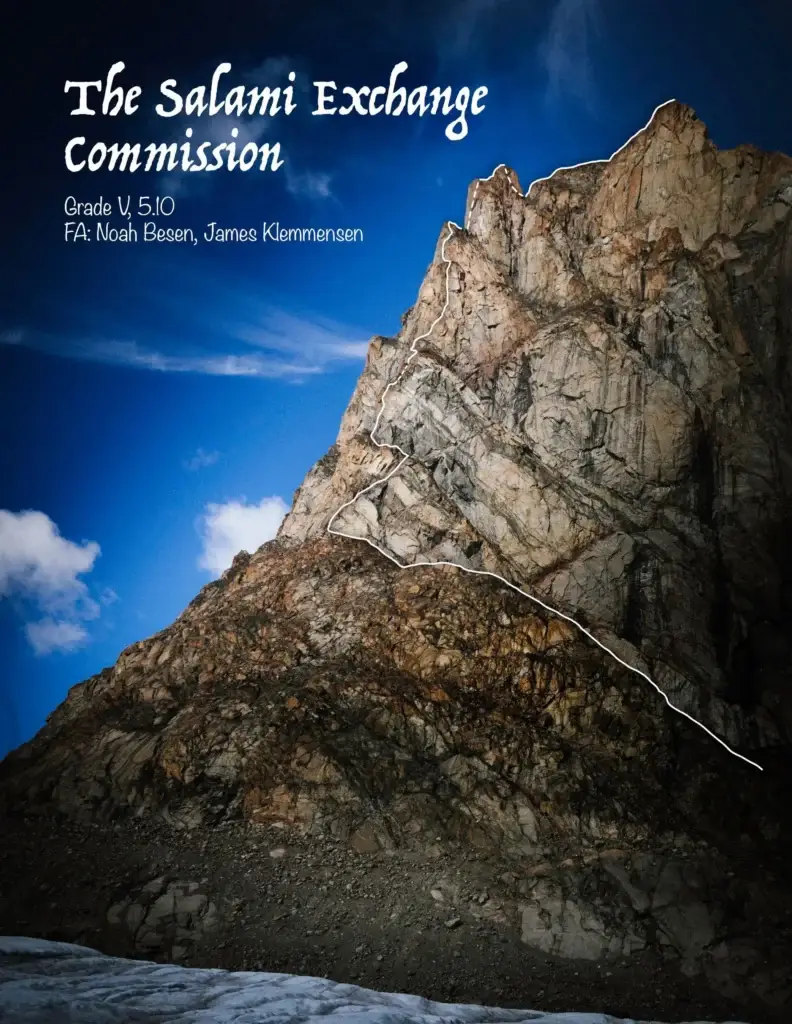
Given that James and Noah are both chronic goofballs however, they decided to name their route something silly: “The Salami Exchange Commission,” after a very serious trade organization the two founded during their trip. The goal of the commission was to ensure that during the expedition, salami would be fairly and equitably exchanged for other salami. After all, without the fair and equitable exchange of salami, climbing this route may not have been possible.
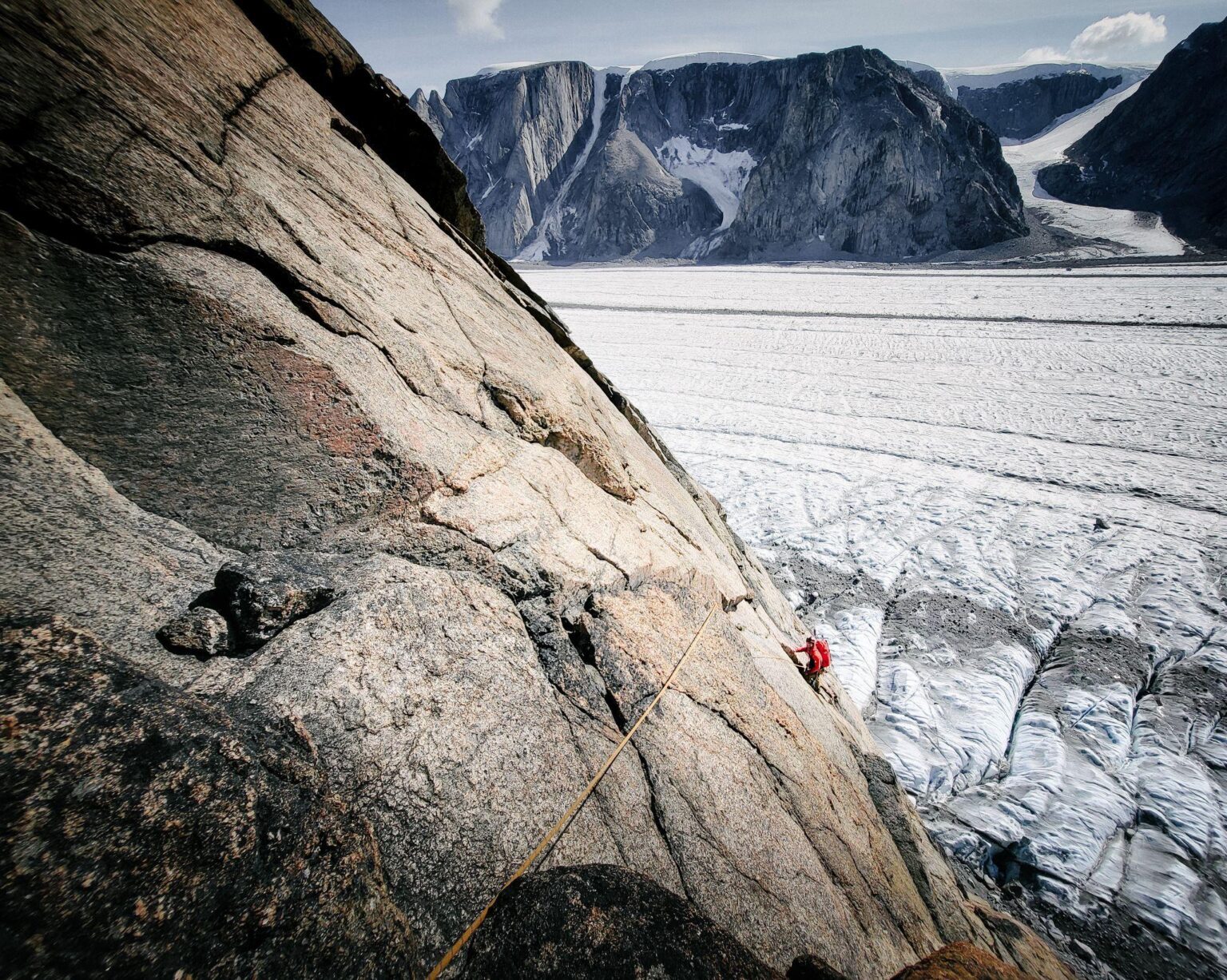
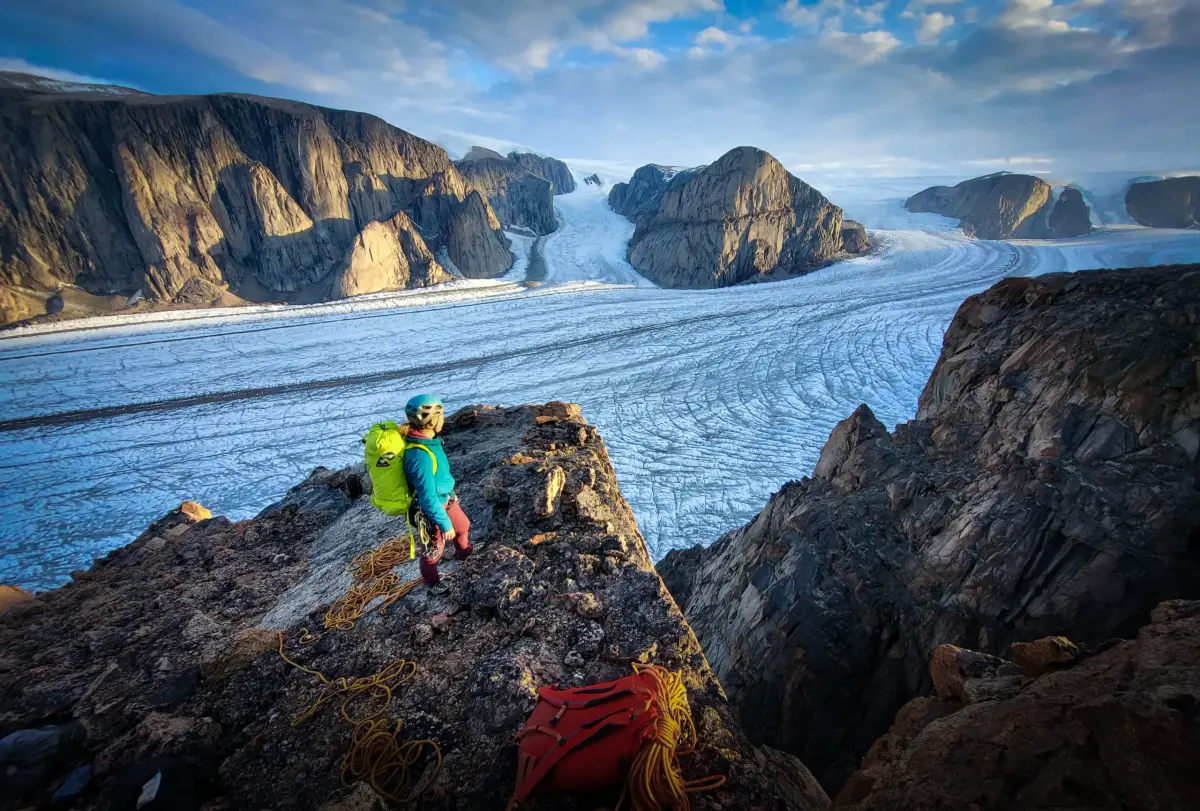
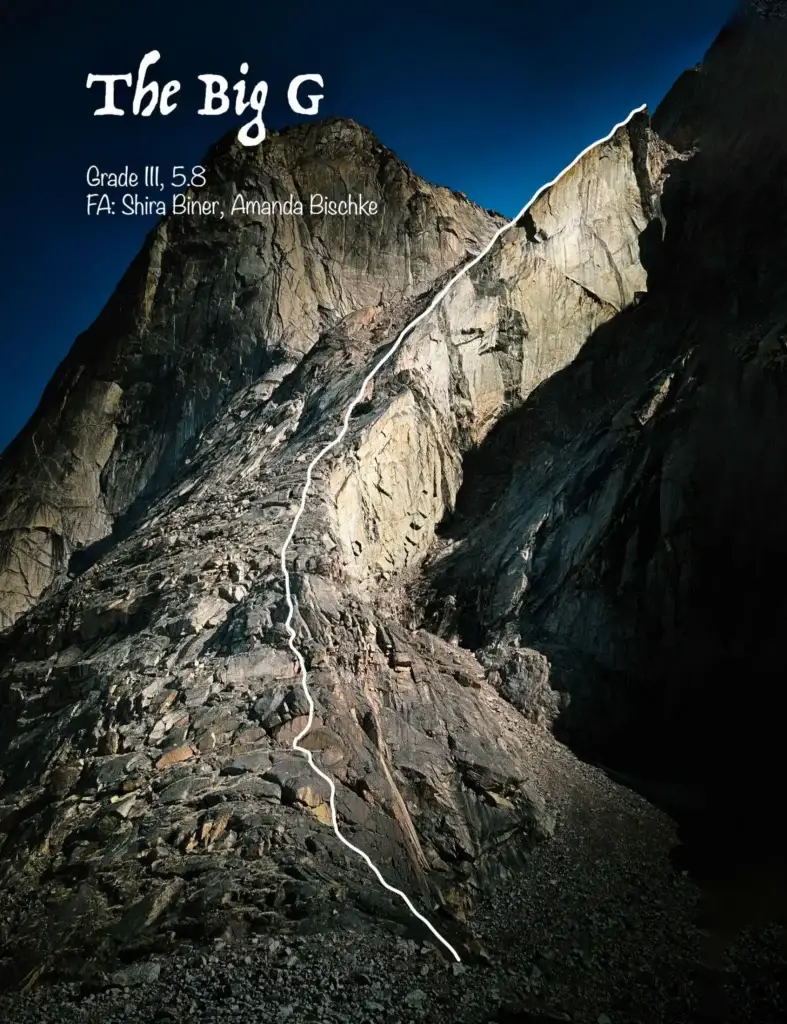
After a few more days of hiking and scoping, Shira and Amanda set their eyes on a feature that looked like it had everything they’d need to be successful in getting to the top. It started out with some scrambling that gradually increased in steepness until a rope was required. They followed the path of least resistance, enjoying pitch after pitch of moderate climbing up to a difficulty of 5.8. They named it The Big G, because the G stands for “Gnarwhal”. For a bit of context, we came across many enormous narwhal bones from the Inuit narwhal hunt at a couple campsites and we were always talking about the narwhal on the trip. However, adding a “G” whenever talking about narwhals makes it gnarlier.
A mellow yet fun rock climb in an epic setting, this climb was an all-female first ascent in the Arctic!
The route was descended on rappel. They returned to camp, and discussed the next options.
Meanwhile, James and Noah had walked 10 km further up the northern fork of the Coronation Glacier, setting up a temporary camp for a couple nights. Their hope was to find and climb something shorter and a little harder than their first route. Unfortunately, after a day of walking and staring at wall after wall with their binoculars, they came to the conclusion that the lines they were most inspired by would require more time and resources than they had at their disposal. A power drill and a few hundred meters of rope to fix would have made a lot more possible, but were more than we could have brought here in our kayaks. Nonetheless, the rock quality further up the glacier looked a lot better than closer to our base camp. As such, they set their sights on one of several prominent buttresses, figuring it would be moderate and climbable in a day, if not as inspiring as their first climb.
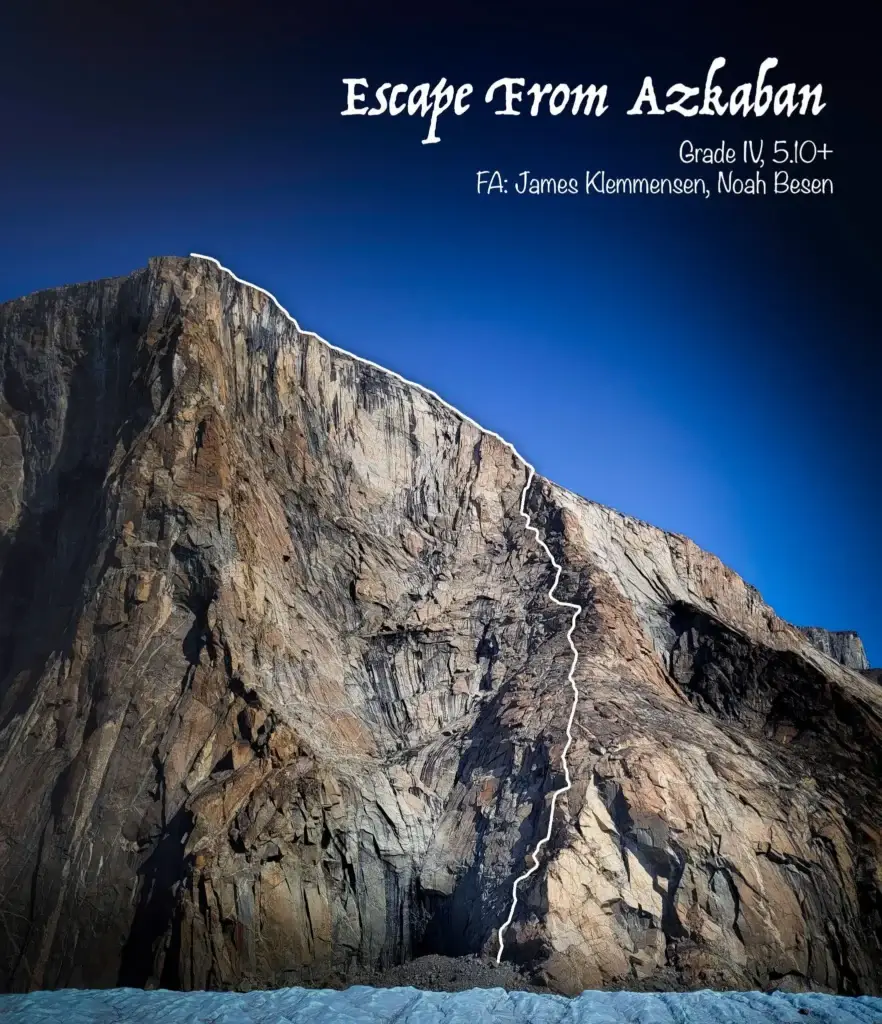
Much to their surprise however, the route they found – while moderate – contained pitch after pitch of fantastic crack climbing on solid rock. Though not quite as big and proud as their previous route, this was certainly the highest quality climb they found on this trip, with pitches that would rate highly even back home in Squamish!
Sadly, this was marred by the descent, during which a giant, impassable canyon / moulin / chasm blocked their path back onto the Coronation Glacier. Having left their sleeping gear on the other side of this unexpected chasm before starting their climb they spent several hours detouring back uphill and around the obstacle, crossing an ice cored moraine in the process. During this time, they began to speculate that this must be what it feels like to have your soul sucked out by a dementor from Harry Potter… making a long detour back uphill and around an obstacle, when you want nothing more than a good night of sleep. Eventually, cautious route finding and a lot of complaining saw them back onto the Coronation Glacier, where they collapsed into sleep. The following day they decided to name their new route “Escape From Azkaban,” in memory of their soul-sucking descent experience.
After hiking back to base camp, James and Noah took a much needed rest day, and the group discussed their options for what to do next. Ultimately, it seemed that the best rock we had observed on the trip so far was up the northern arm of the glacier, where Noah and James had just climbed. The entire team was excited to try and do one more route, so we made a plan to move our camp 10km up the glacier, where we would spend our last few days shooting for one last climb – this time as a team of four.
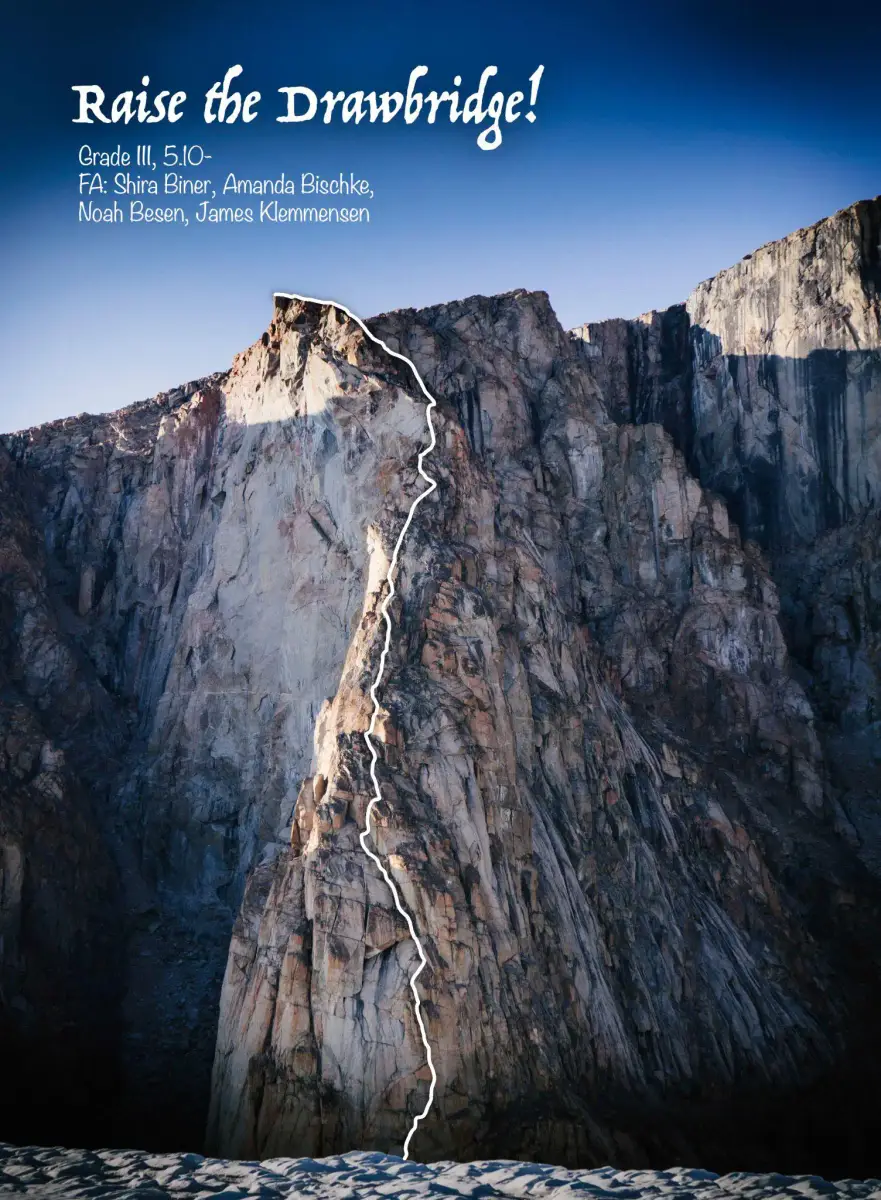
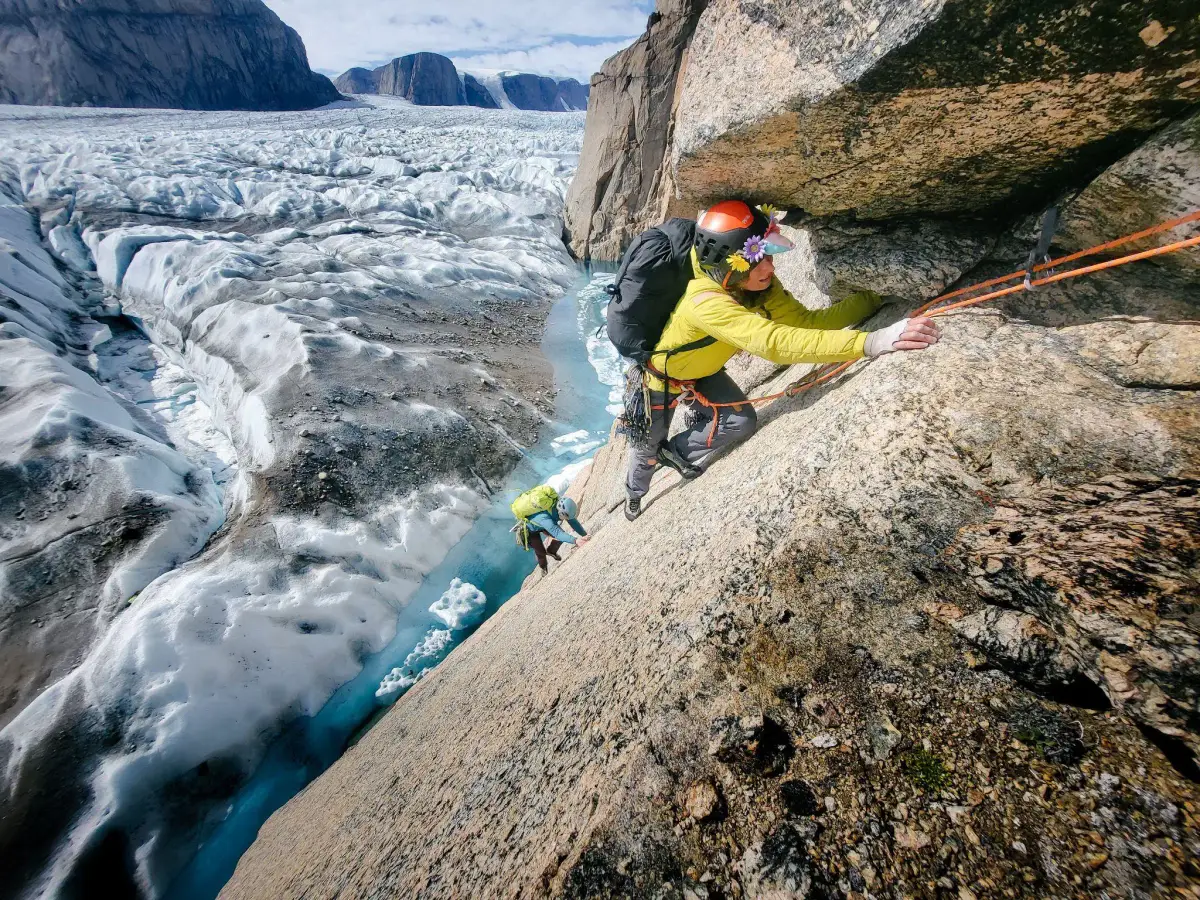
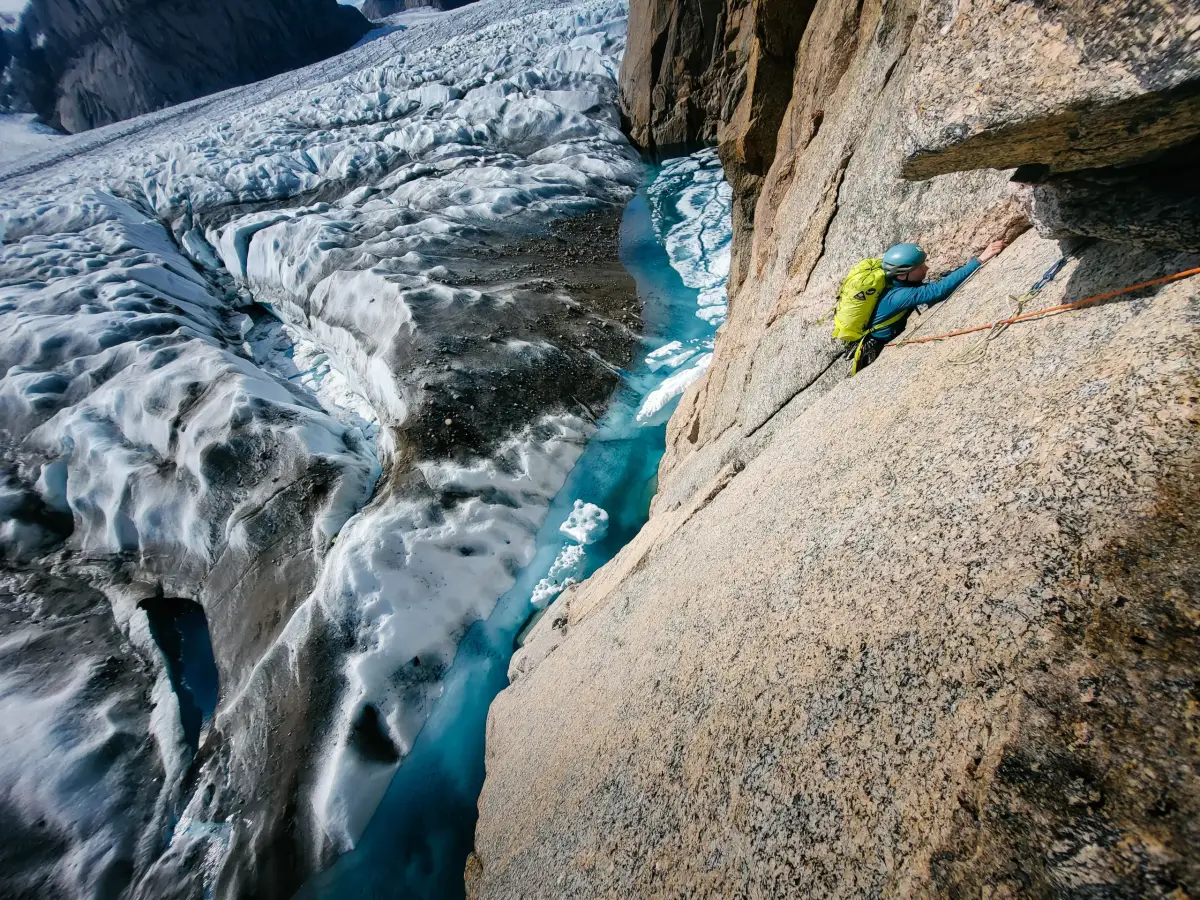
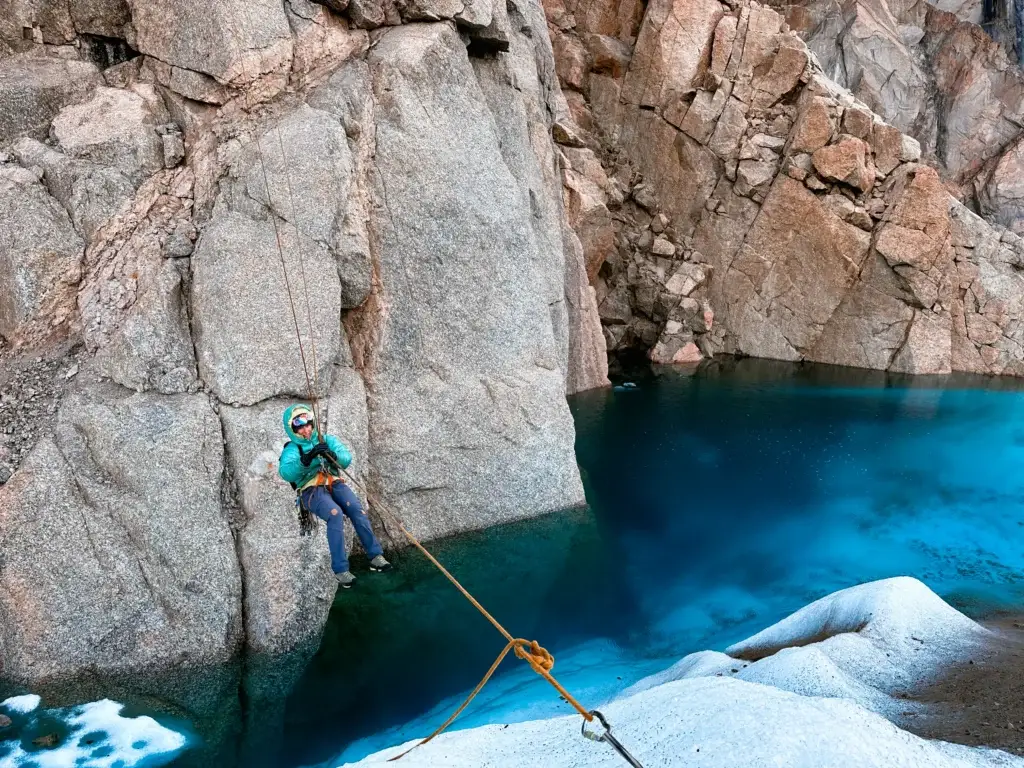
After moving camp, and spending a couple days exploring and deliberating, the team decided on what would ultimately be the final route of the trip – an aesthetic buttress that James and Noah had noticed on their earlier forays up this part of the glacier. The feature seemed like something that could be climbed and descended in a day without too much difficulty, except for one small detail… accessing the base of the climb. Separating the glacier from the rock, there was a deep blue water filled moat. It was only a few meters wide – just far enough, and with a difficult enough landing, to make jumping an unwise prospect.
Thankfully, given that we already had drysuits for the paddling portion of our trip, we were able to come up with an unorthodox solution. Noah would cross in his dry suit, and we would set up a Tyrolean traverse between the rock and ice for the rest of the team to follow. Certainly the most adventurous approach of the trip, and it was worth the effort; the climb contained a couple steep but well protected pitches to start, followed by fun and relatively easy climbing all the way to the top of the feature. It was great to finish off the climbing portion of the trip by succeeding on a new route together as one big team. We decided to name this route “Raise the Drawbridge,” owing to the unique glacial moat guarding the base of the climb.
After rappelling off our final climb and resting, we began to pack up and move back towards the ocean. A couple days of crushing gear shuttling brought us back into our boats, homeward bound. Headwinds ensured we still had our work cut out as we paddled back to Qikiqtarjuaq. Here, we were greeted with open arms by the community, many of whom, to our surprise, were very excited to see us back! On our departure, Qikiqtarjuaq had felt like the middle of nowhere, but after over a month out alone on our journey, it was a metropolis! In the days before traveling home – waiting out several canceled flights – we were lucky enough to meet many members of the local inuit community. They laughed with us as we recounted stories, and told us their own. Above all else, they made us feel welcome.
In many ways – each of us is still processing our experience on this trip. It is the longest any of us have spent on an expedition, and the depths of what it means to us will take time to work through. What we can say for certain though is that we are all so grateful to have been guests in this beautiful part of the world.
The Jen Higgins Grant for Young Women
The ACC is dedicated to helping young women pursue their adventure dreams with annual cash grants from the Jen Higgins Fund. Teams must include a young woman who is central to conceiving, developing and leading the trip.
The Jen Higgins Fund was established by friends and family to honour Jen Higgins after her death in 1997. Jen’s enthusiasm and generous spirit continue to live on by supporting young women in creative, self-propelled mountain adventures with this grant.