
Trailhead Meetings
By the Safety Committee
One of the responsibilities of trip coordinators is to efficiently transmit critical information to the group. Most of this information can be sent to participants ahead of time, but there is no substitute for a trailhead meeting. Also called a pre-trip briefing, it is typically done at the parking lot or meeting location for a trip, prior to hiking off into the woods. The meeting should include any relevant information regarding the trip, and the best assumption to make is that nobody has read any information beforehand.
Note: longer and more complex trips sometimes benefit from an in-depth pre-trip meeting prior to the trip, followed by a brief trailhead meeting as the group sets out in the morning.
The basis of a trailhead meeting starts with your trip plan. You should know the plan inside and out, including the route, trip difficulty, weather, risks, wildlife, skill requirements, contingency plans and any other relevant topics. It is also important to discuss known unknowns relevant to the trip.
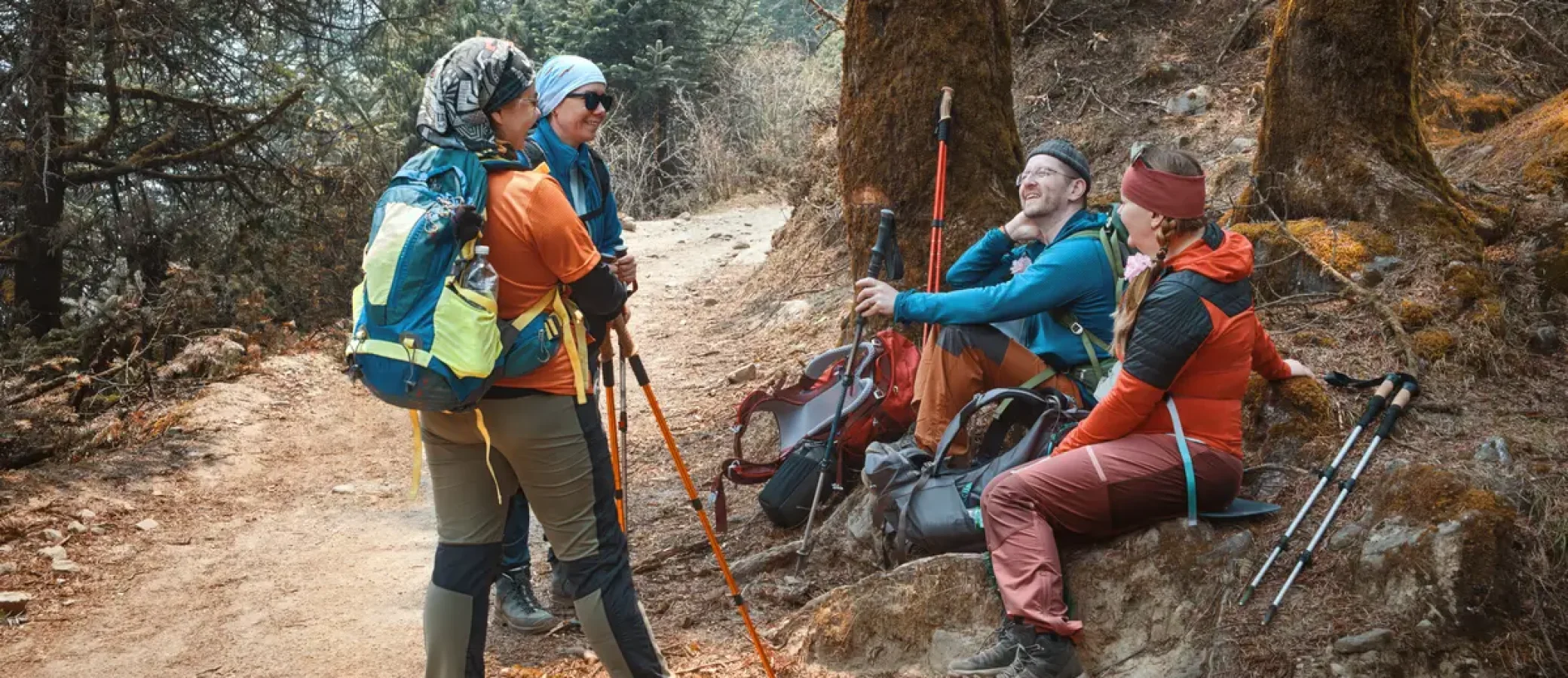
How to organize an efficient trailhead meeting
Organizing a meeting can be difficult, and conversation can often go off on significant distracting tangents that may confuse participants, or put a time-crunch on the rest of the information. Consider following an outline, like this one, targeted at a hiking group.
- Introductions
- Expectations from the Participants
- We are one group moving as one group and making decisions as one group
- Speak up if you’re uncomfortable or concerned. If one person declares that they are done, then the group will turn around and the discussion becomes how to do that safely.
- Travel expectations: pace and spacing, staying on trails.
- Be honest about skills and capabilities.
- What are we doing?
- Objective of the trip.
- Route: Distance, elevation, terrain, expected time to completion.
- Lunch and Breaks: Locations and timelines.
- Hazard Areas: (e.g. high exposure after lunch break, rockfall, cornices, etc.)
- Establish a clear turn-around point, time, or condition.
- What should be in your backpack?
- 10 Essentials:
- Navigation, Nutrition, Hydration, Sun Protection, Insulation, Illumination, First Aid, Fire Starter, Repair Kit, Emergency Shelter.
- General: food, water, clothing, first aid equipment, etc.
- Specific required equipment: microspikes, rope, climbing harness, etc.
- Optional: hiking poles, hammock, etc.
- Do a gear check, identifying group vs individual gear.
- 10 Essentials:
- Weather
- Expectations and monitoring.
- Other Risks, and Mitigations:
- What’s on your mind? What are you concerned about, or want to talk about?
- For example: creek crossings, rockfall hazard mitigations, hypothermia, wildlife, heat stroke, trip timelines, personal distractions, etc.
- What’s on your mind? What are you concerned about, or want to talk about?
Further reading
Alpine Club of Canada – Leadership Development Handbooks
Sierra Club – Pre-Trip Briefing, Also Known as Trailhead Talk
Get Involved
If you have an idea for future bulletins please contact [email protected]. You can help the club’s safety culture by reporting incidents and near misses using our reporting form. If ACC members would like support on safety issues in trip planning, please reach out and we would be happy to talk it through with you!