

Power House Cliff
Written by Jeanine Rhemtulla
This story comes to us from the book Mountain Voices. Paired with photos from the Mountain Legacy Project, Mountain Voices is a collection of unique short essays from alpinists, activists, artists, and mountain researchers as they share their unique and fascinating perspectives. The ACC is pleased to feature this new monthly series, highlighting a few of the incredible stories from Mountain Voices over the coming year.
To learn more about the book Mountain Voices, or to order a hard copy, visit their website.
I am from the flatlands of Alberta, land of the big sky and endless horizons. I love to hike, but invariably I am seduced by the plants—the spring ephemerals, the glacier lilies, the tangled mosses, the glorious abundance of bright purple asters and goldenrods in the fall. Mostly I wander for pleasure, or to harvest berries, cottonwood buds for balm, nettles for tea. Bagging a summit is not usually my goal.
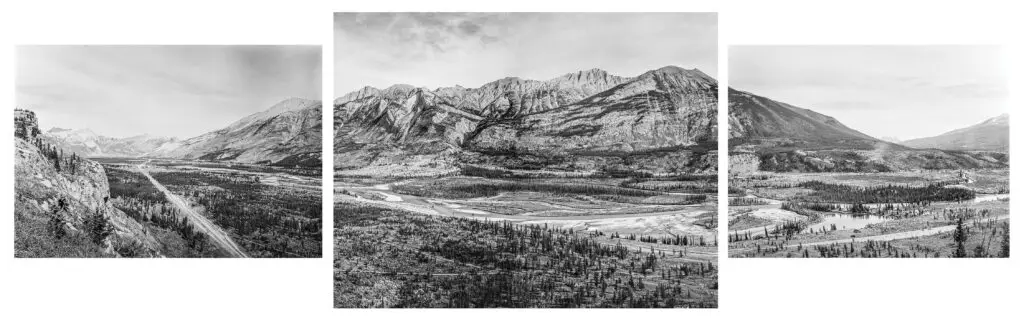
That changed in the mid-1990s. I started grad school and met Eric Higgs, a young professor working in Jasper National Park to understand the role of restoration in wild landscapes. It seemed an odd focus, for how could a vast and wild and (supposedly) unpeopled park like Jasper need restoration? He invited me to join his team, and challenged me to determine how the landscapes of Jasper had changed over the previous century.
So I moved to the mountains to search for the history of the land. A park warden shared a file drawer filled with albums of old photographs. Carefully numbered and captioned with cryptic references, they were clearly a special collection. But of what? More sleuthing revealed that they were taken by Dominion Land Surveyors making the first maps of the park. By summiting mountains and taking panoramic photographs from many peaks and promontories, they gathered the data needed to plot the contours of the landscape. To them, the photographs were a mere step in the process of making maps. To us, they were a key to visualizing past landscapes. The Mountain Legacy Project was born.
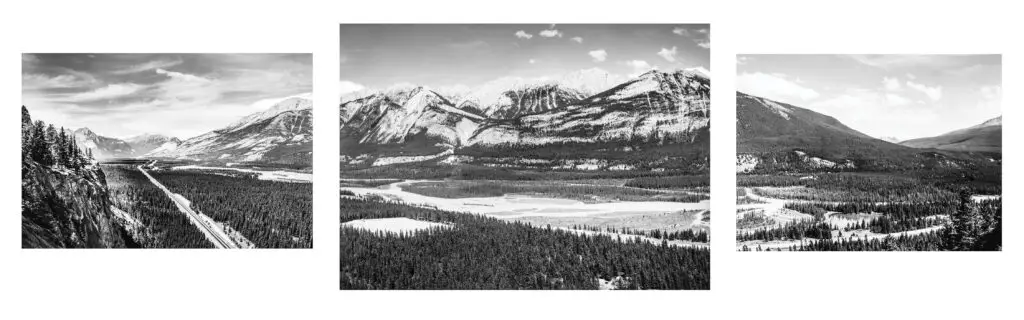
One of the first stations that we rephotographed was Power House Cliff, where, filled with a sense of vertigo, we found ourselves standing in the footsteps of the surveyors but in a landscape utterly changed. Epic hikes, big mountain climbs, scary scree slopes, and (mostly banished from my memory) bush-whacking up slopes covered in dog-hair pine followed. But among the ninety-two survey stations that we rephotographed between 1996 and 1999, Power House Cliff is the one I keep returning to, on foot and in my imagination. The photographs depict vividly the profound changes that have swept the park over the last century.
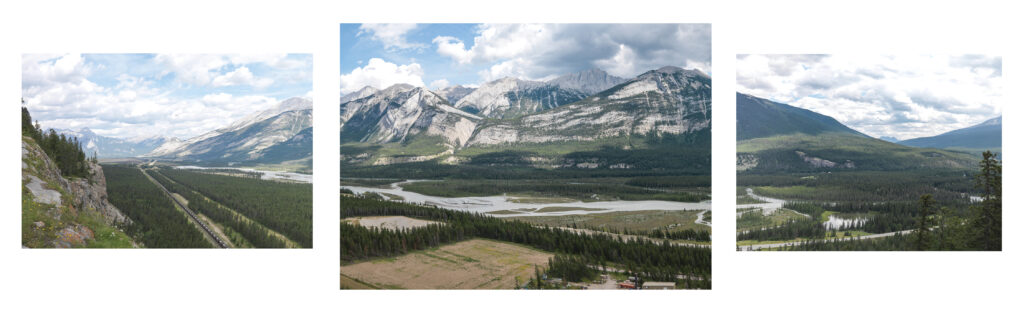
One of the first stations that we rephotographed was Power House Cliff, where, filled with a sense of vertigo, we found ourselves standing in the footsteps of the surveyors but in a landscape utterly changed. Epic hikes, big mountain climbs, scary scree slopes, and (mostly banished from my memory) bush-whacking up slopes covered in dog-hair pine followed. But among the ninety-two survey stations that we rephotographed between 1996 and 1999, Power House Cliff is the one I keep returning to, on foot and in my imagination. The photographs depict vividly the profound changes that have swept the park over the last century.
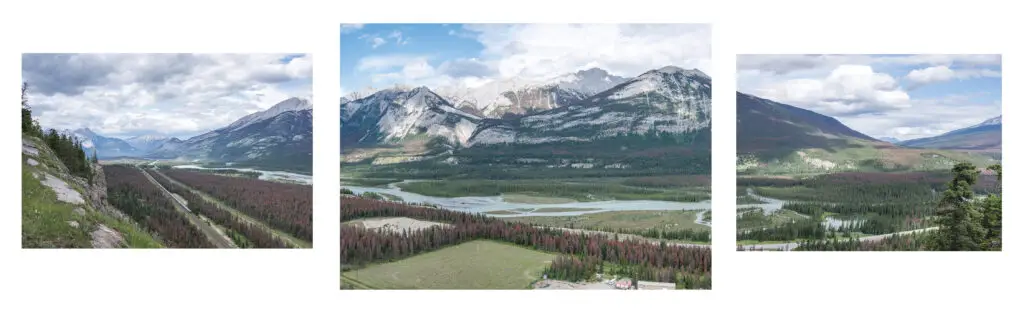
A landscape that once held a mosaic of different patches and pockets of diversity had by 1999 become a homogeneous carpet of green. Two decades later, pictures document a sea of red trees dying from a mountain pine beetle infestation. Turns out this land was never, in fact, unpeopled wilderness. Settlers and the federal government pretended so when they forcibly removed Indigenous and Métis peoples from their lands upon creating what is now Jasper National Park. First Nations had been stewarding the land for millennia, and Métis homesteaders did so through most of the nineteenth century, using fire to create a resilient mosaic of vegetation types that supported an abundance of food plants and wildlife. Colonial administrations did not understand the role of fire in these ecosystems and outlawed its deliberate use. As the trees aged and became more homogeneous, so too did our image of the ideal national park. With the landscape having lost much of the adaptive capacity that diversity brings, the mountain pine beetle, which had not previously been able to breach the barrier of frigid winter temperatures, flew in on the winds of climate change and has been feasting, unencumbered by the earlier patchiness that would have slowed its spread. And this despite valiant efforts by Jasper staff in recent years to reintroduce low intensity fire to the valley (just visible in the leftmost 2019 Powerhouse Cliff images).
What will the next hundred years bring? What will the park look like to the next young researcher who goes in search of the past?
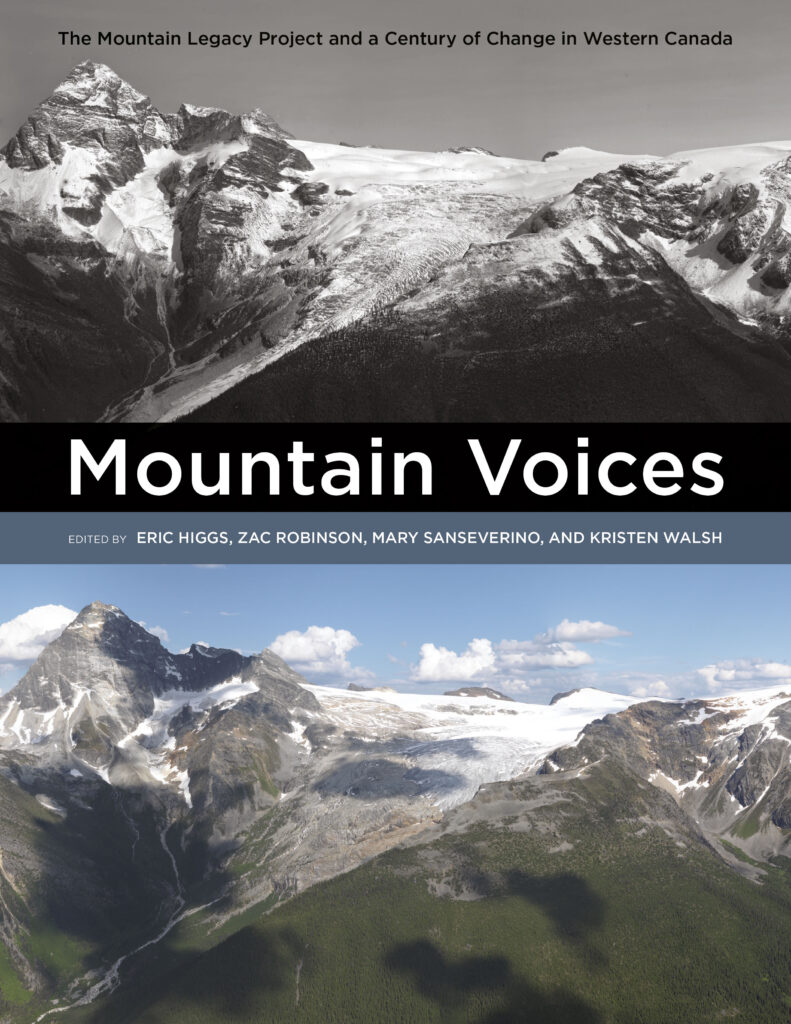
Mountain Voices
Discover Canada’s mountains as you’ve never seen them before with gorgeous photography from the Mountain Legacy Project accompanied by gripping essays from mountaineers, artists, and mountain researchers.
Mountain Voices features a diverse array of voices, including Indigenous activists, employees of Canada’s national parks, interdisciplinary scientists dedicated to mountains, alpine adventurers, and historians captivated by tales of mountain pasts. Mountain Voices brings the landscape to life through the passion and devotion of those who love it deeply.
“The stories are personal and universal. The paired images are humbling. Together they make a profound case for stewardship of these alpine environments.” -Carine Salvy, Executive Director, The Alpine Club of Canada
Mountain Voices was published with support from The Alpine Club of Canada’s Environment Grant.